Loading, about as long as a coffee at the Lion’s Head.
The History of Castlegar
The confluence of two great rivers, two centuries of settlement, and the community that chose to grow here.
Since time immemorial
Where two great rivers meet, three cultures converge.
Castlegar's history is told through its geography. The Kootenay and Columbia Rivers have drawn people to this valley for thousands of years: first the Sinixt, then railway workers and riverboat captains, then Doukhobor settlers seeking land for a new life. What they built here is still here.
This is the short version of that story, told chronologically. For more detail, the Castlegar & District Heritage Society, the Station Museum, and the Doukhobor Discovery Centre are the authoritative sources.
At a glance
- Incorporated
- January 1, 1966
- Amalgamated with Kinnaird
- 1974
- Oldest living structure
- Brilliant Suspension Bridge, 1913
- On the territory of
- The Sinixt People
Eleven chapters in the story.
Told chronologically, from deep time to the present day.
Time immemorial
Sinixt homeland
The confluence of the Kootenay and Columbia Rivers has been home to the Sinixt (Lakes) People since time immemorial. Pit-house archaeological sites at Zuckerberg Island predate European contact by millennia. Castlegar sits on the unceded traditional territory of the Sinixt, whose connection to this valley continues today.
1890s
Railway, riverboats, and a name
The CPR's Columbia and Kootenay Railway reached the area in 1891, linking the interior mining camps to the Columbia River system. A steamboat landing grew at the confluence, servicing riverboats that connected Revelstoke to the US border. The name "Castlegar" is often attributed to a resemblance between local rock formations and Castlegar, Ireland.
1908
The Doukhobors arrive
Led by Peter "the Lordly" Verigin, thousands of Doukhobor settlers arrived from Saskatchewan seeking land for their communal way of life. They purchased vast tracts in the Kootenays, including land at Brilliant and Ootischenia across the river. Their jam factory, sawmills, orchards, and communal villages reshaped the region's economy and culture. The influence of Doukhobor bread, borscht, architecture, and song is still felt today.
The Doukhobor Discovery Centre at 112 Heritage Way tells this chapter in depth.
1913
The Brilliant Suspension Bridge
Doukhobor engineers completed the Brilliant Suspension Bridge across the Kootenay River, a remarkable feat of community engineering with no government help. The bridge carried wagons, people, and produce between Brilliant and Castlegar. Designated a National Historic Site of Canada in 1995 and restored in the 1990s, it still stands as one of the few early-twentieth-century cable suspension bridges of its kind surviving in western Canada.
Walk the Brilliant Suspension Bridge across the Kootenay River. It still carries pedestrians and cyclists.
1924
Tragedy at Farron
Peter "the Lordly" Verigin was killed in an explosion aboard a CPR train near Farron, east of Castlegar. Investigators were never able to determine a definitive cause. His death marked a turning point for the Doukhobor community, which subsequently fractured into different groupings that continued to shape the Kootenays.
1940s–1950s
Wartime growth and post-war industry
During and after the Second World War, Castlegar grew as a service centre for forestry, mining, and hydroelectric development. The CPR remained a major employer. The Celgar pulp mill, which opened nearby in 1961, would become one of the region's anchor employers for decades.
1966
Incorporation
After years as a growing unincorporated community, Castlegar was officially incorporated as a town on January 1, 1966. Kinnaird, the neighbouring community to the south, was incorporated separately, a distinction still echoed in street names and neighbourhood identity today. The two communities amalgamated in 1974 to form the Castlegar we know.
1974
Amalgamation with Kinnaird
Castlegar and Kinnaird formally amalgamated to create a single city. Selkirk College had opened in 1966 (Canada's first community college), bringing students and educators to the valley. The airport, originally a wartime airstrip, was expanded to serve regional air traffic.
1980s–1990s
Sculpture, salmon, and a civic identity
The Castlegar & District Public Library opened in 1990. The Station Museum preserved the old CPR station at Zuckerberg Island. The Brilliant Suspension Bridge was restored in the 1990s, reopened as a National Historic Site. The City began building a civic identity rooted in confluence: rivers, cultures, and histories meeting at one point.
2011
Sculpturewalk opens
Castlegar Sculpturewalk installed its first exhibition of outdoor sculptures across downtown, creating an annual rotating open-air gallery. The People's Choice winner is purchased by the City and added to the permanent civic collection. Twenty years on, Sculpturewalk has grown into one of the largest public-art programs of its kind in western Canada.
2020s
A modern Kootenay city
Castlegar approaches a population of 10,000 with a growing economy anchored by Selkirk College, the West Kootenay Regional Airport, regional health services, forestry, tourism, and small business. The 2024 opening of Canada's tallest play structure at Millennium Park made national news. The Housing Strategy and a modernized Zoning Bylaw (Bylaw 1428) are reshaping the city for the next chapter.
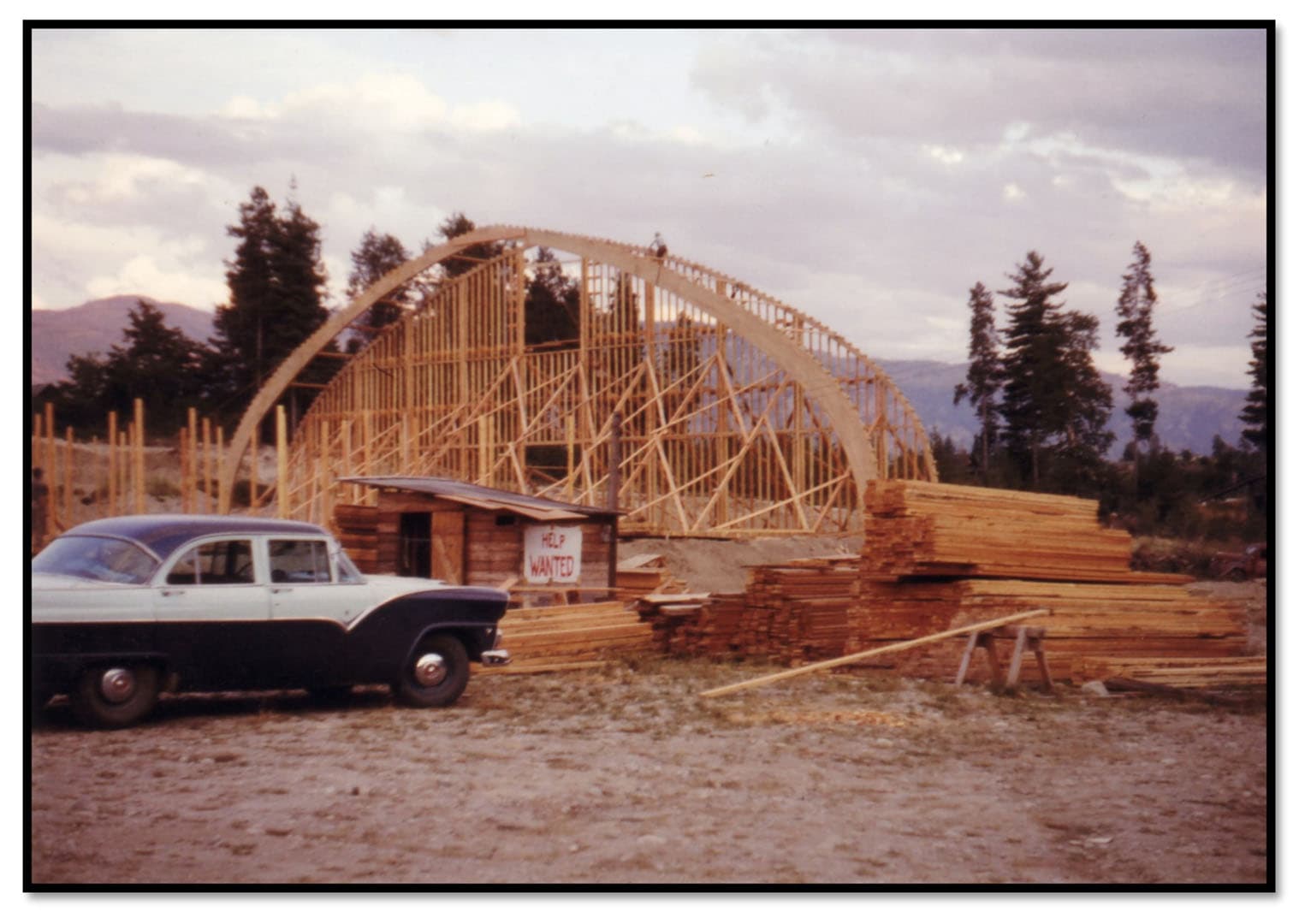
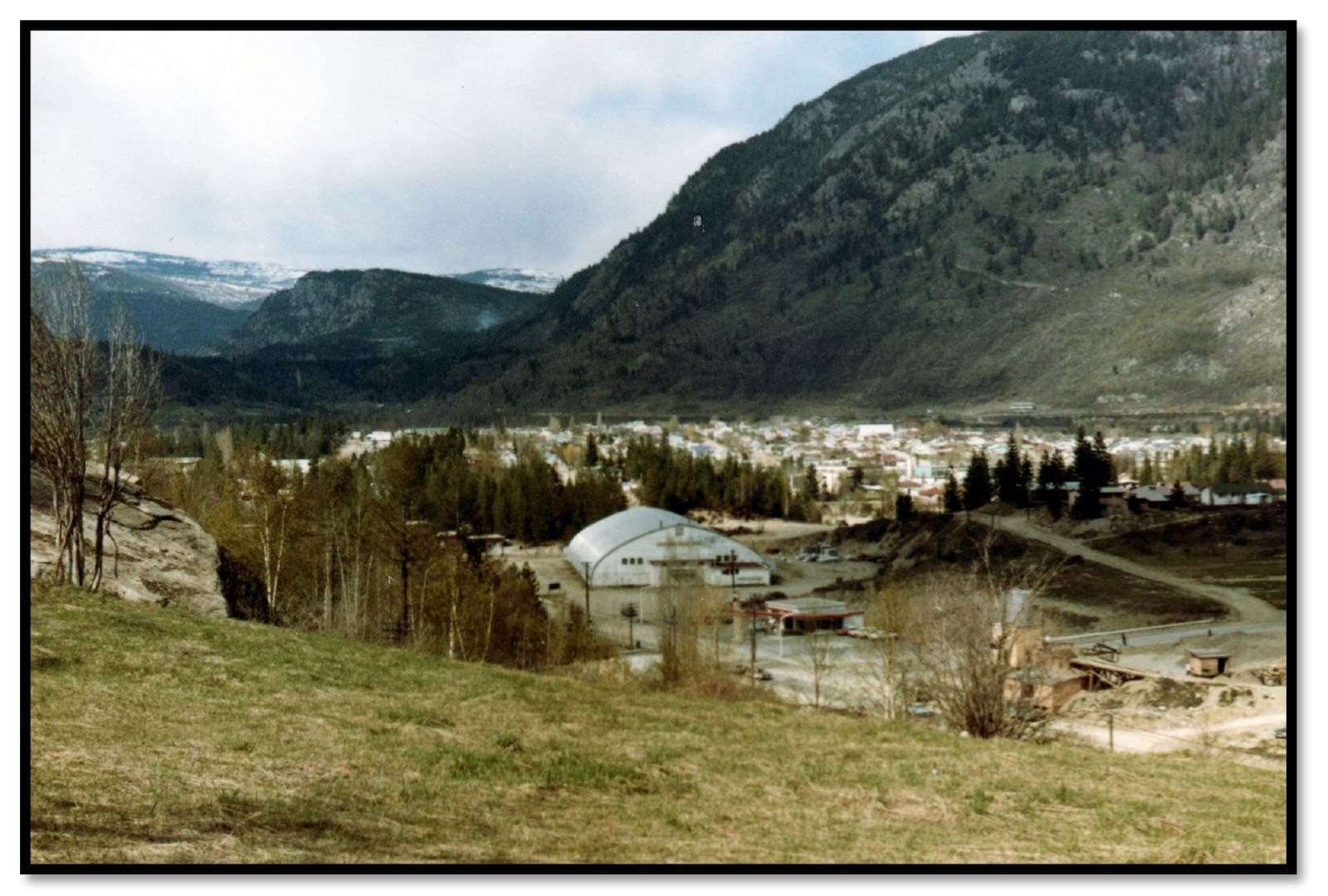
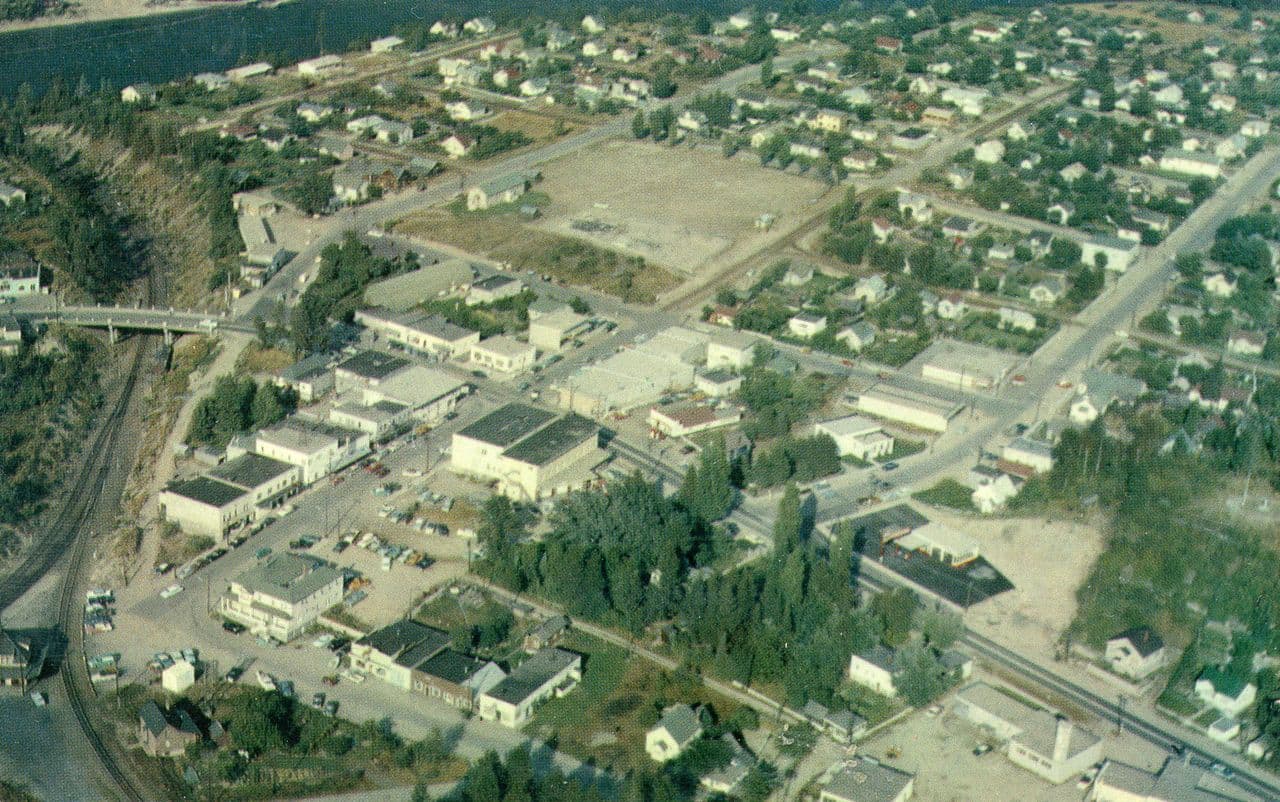
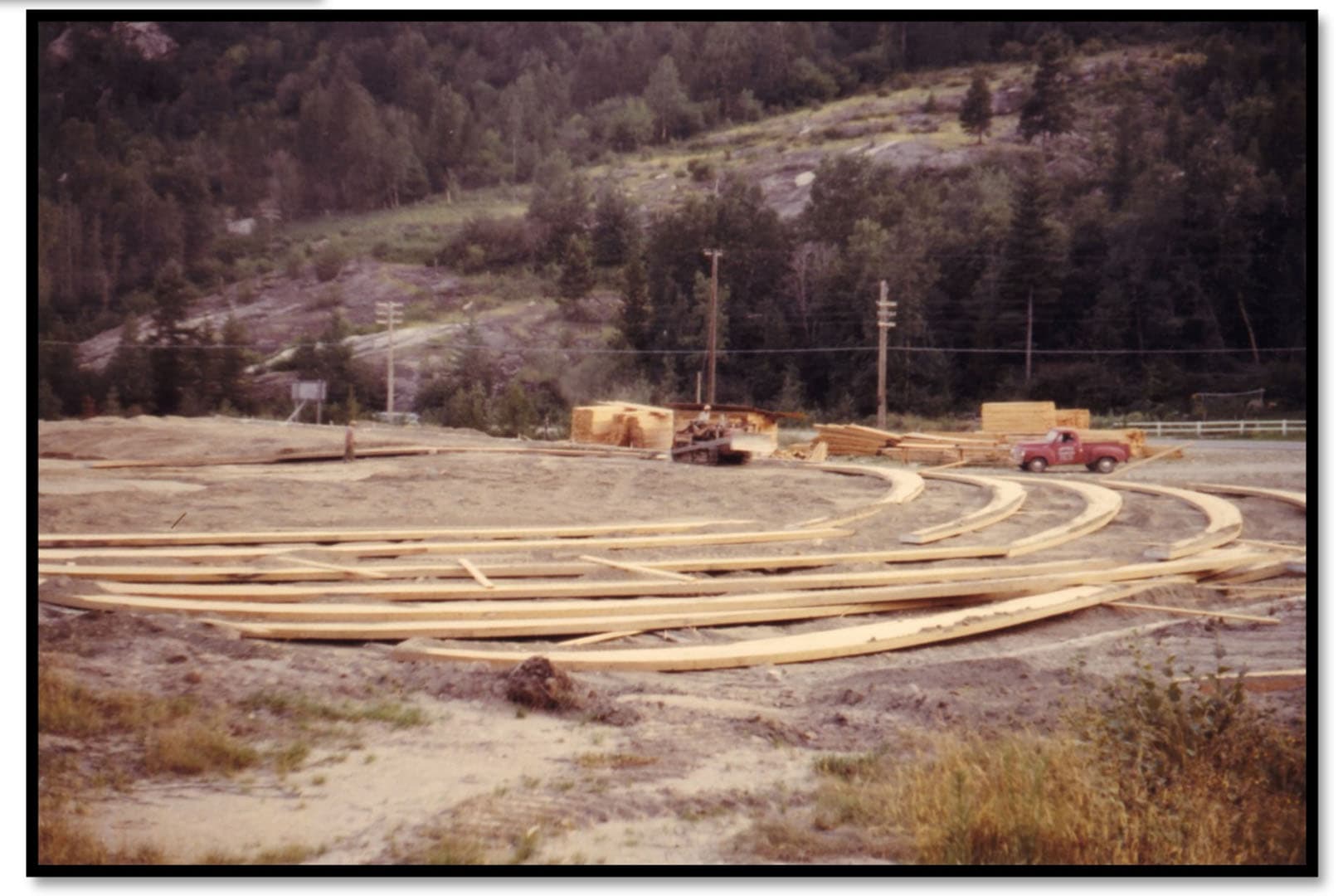
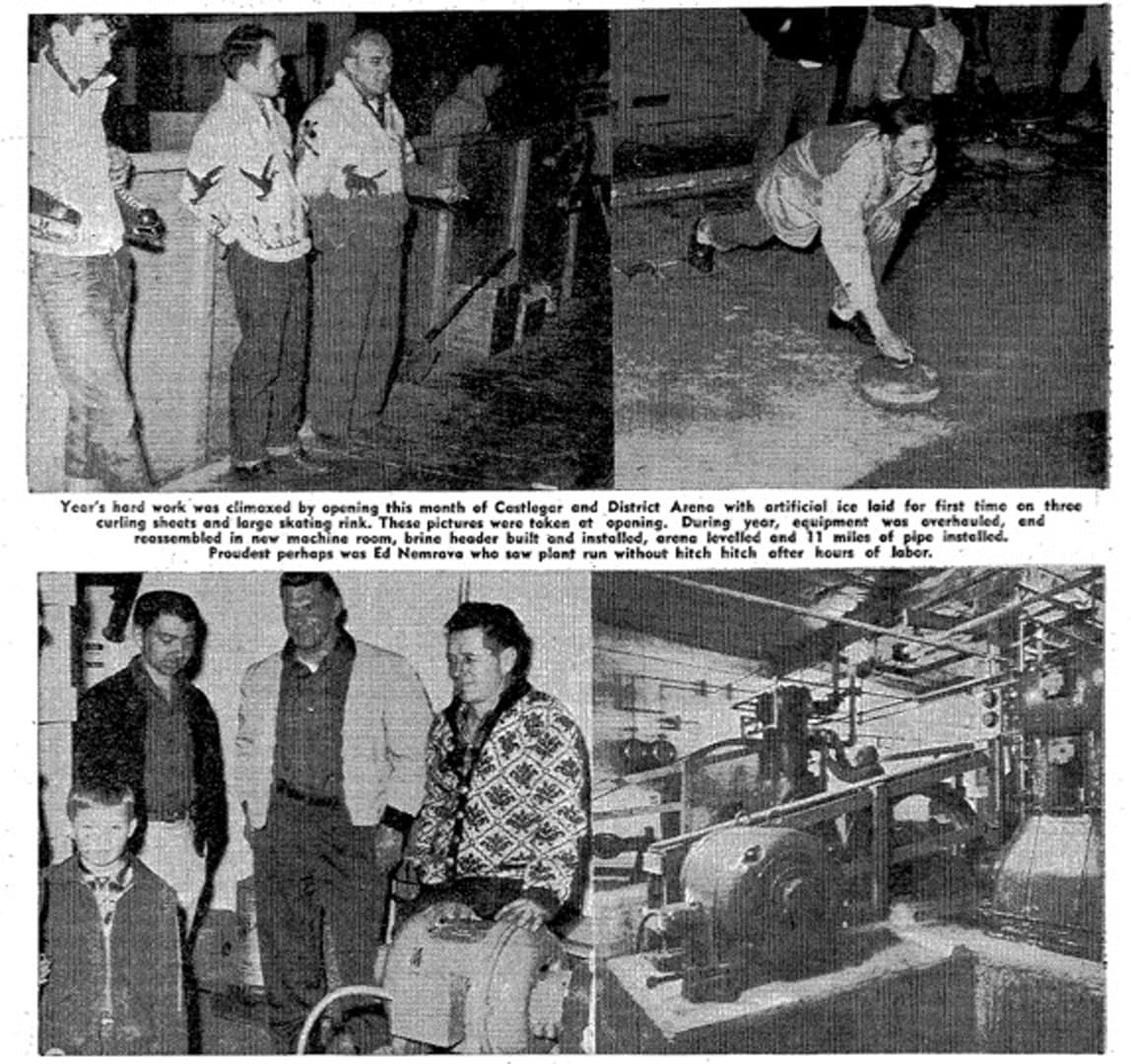
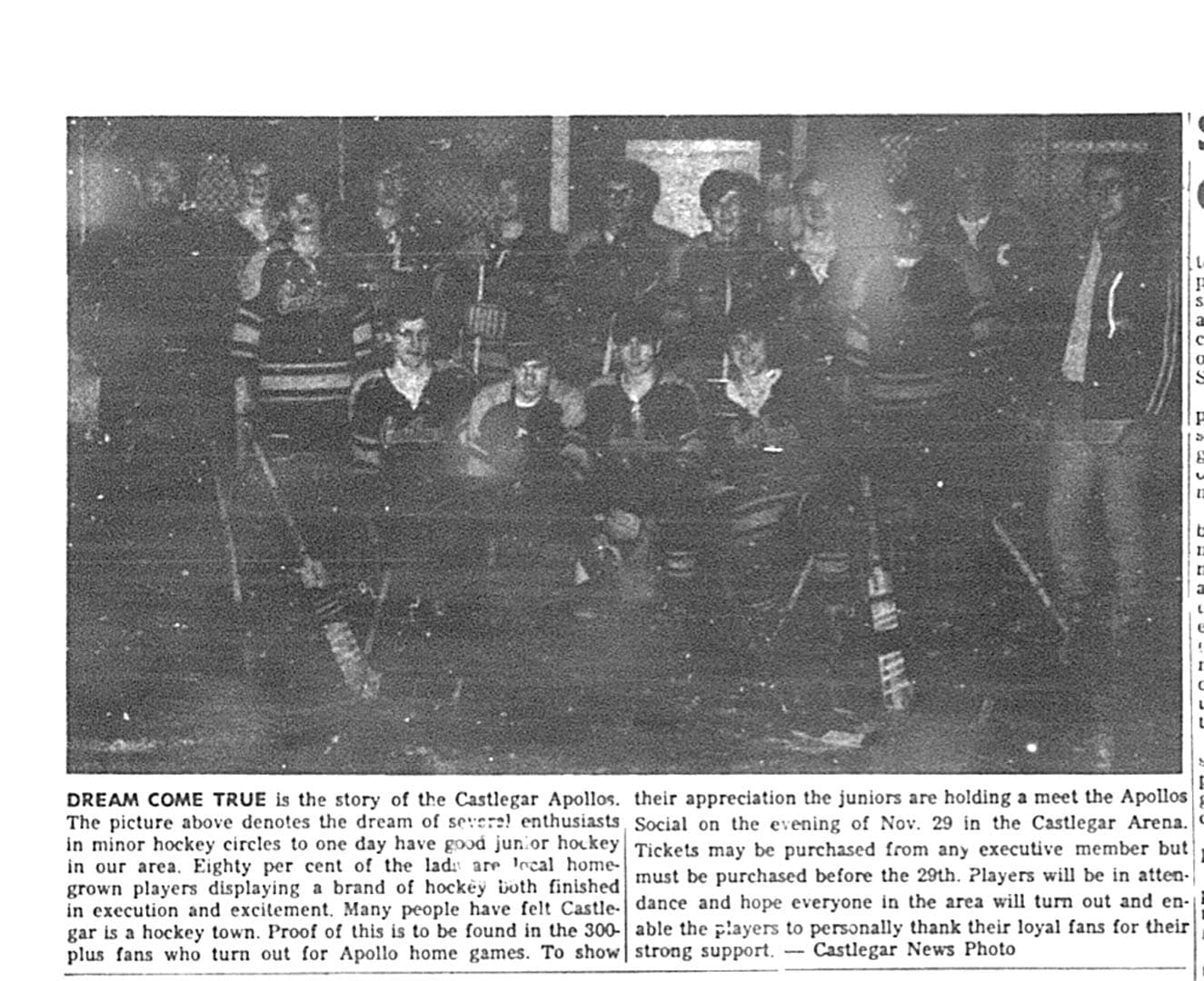
From the archives.
Good to know
Indigenous territory acknowledgement
The City of Castlegar is located on the unceded traditional territory of the Sinixt (Lakes) People, who have cared for this valley since time immemorial and whose ongoing connection to the land we honour. Learn more through the Sinixt Nation.
Where to go to touch the history.
You don't have to take anyone's word for it. These places, all within ten minutes of downtown, tell the story themselves.
1913 engineering marvel
Brilliant Suspension Bridge
A 1913 cable suspension bridge built by Doukhobor engineers, restored in the 1990s and designated a National Historic Site of Canada.
Deep-time archaeological site
Zuckerberg Island
Pit-house remains from Sinixt ancestors predate the City by millennia. The Chapel House (Station Museum) sits on the same island.
Doukhobor heritage
Doukhobor Discovery Centre
112 Heritage Way. Reconstructed Doukhobor communal village with guided tours, artifacts, and a bread oven still used for community events.
Railway history
The Station Museum
The restored CPR station at Zuckerberg Island tells the story of railway and riverboat Castlegar, the reason the city exists where it does.
What to do next
Living in Castlegar
What it's actually like to live here, told by the locals.
Brilliant Suspension Bridge
The 1913 Doukhobor bridge: story, photos, and how to visit.
Zuckerberg Island
The confluence island with pit-houses and the Station Museum.
Sculpturewalk
Castlegar's modern chapter, outdoor public art.
Still need help?
Talk to Castlegar & District Heritage Society
- Phone
- 250-365-6440
- info@castlegar.ca
- Hours
- Monday to Friday, 8:30am to 4:30pm
- In person
- The Station Museum at Zuckerberg Island, 901 7th Avenue, Castlegar, BC
Submit a request online
Faster than calling for non-urgent issues. We respond within one business day.
Historical summary compiled from the Castlegar & District Heritage Society, the Doukhobor Discovery Centre, BC Archives, and community sources. For archival records, contact the Heritage Society directly.